November is Virginia Oyster Month, and the industry it celebrates is growing. Direct farm sales of Virginia shellfish aquaculture totaled $81 million in 2024, a 52 percent increase from $53 million in 2018, according to the Virginia Institute of Marine Science, and farmed oysters drove most of that growth by more than doubling in sales. The same report counts more than 700 people working directly in shellfish aquaculture, up from an estimated 480 in 2018, and describes Virginia as a national leader in both hard clam and eastern oyster production.
An industry rooted in Middlesex
Oystering has supported Middlesex families for generations. By the 1700s, watermen on the lower Rappahannock were selling oysters to their neighbors and building small shucking houses, and Urbanna’s shucking houses employed dozens of shuckers well into the twentieth century. Disease cut the Rappahannock’s oyster population sharply in the 1980s and the shucking industry declined with it. The revival that followed has been built on aquaculture, with growers cultivating distinctive local oysters shaped by the waters where they grow and shipping them throughout the country. Oyster growers, seafood businesses, watermen and restaurants operate throughout the county, including in Deltaville, Topping, Wake and Urbanna.
The Middlesex County Economic Development Authority regards the oyster and seafood industry as part of the county’s economic foundation and part of its identity. The industry also depends on the working waterfront, which is why the EDA’s Project Access on Broad Creek in Deltaville includes a commercial dock and a public boat ramp, the first in Deltaville.
How Middlesex is promoting Virginia oysters
The 69th Urbanna Oyster Festival takes place Friday and Saturday, November 6 and 7, and is the oldest oyster festival in the country. It is the official oyster festival of the Commonwealth and hosts the Virginia Oyster Shucking Competition. Explore Middlesex, the county’s tourism organization, has been featuring Virginia oysters across its channels this season and pointing visitors to local oysters, restaurants and events. The EDA encourages residents and visitors to buy from certified dealers and local restaurants and to keep supporting the Middlesex watermen and growers who work these waters year-round.
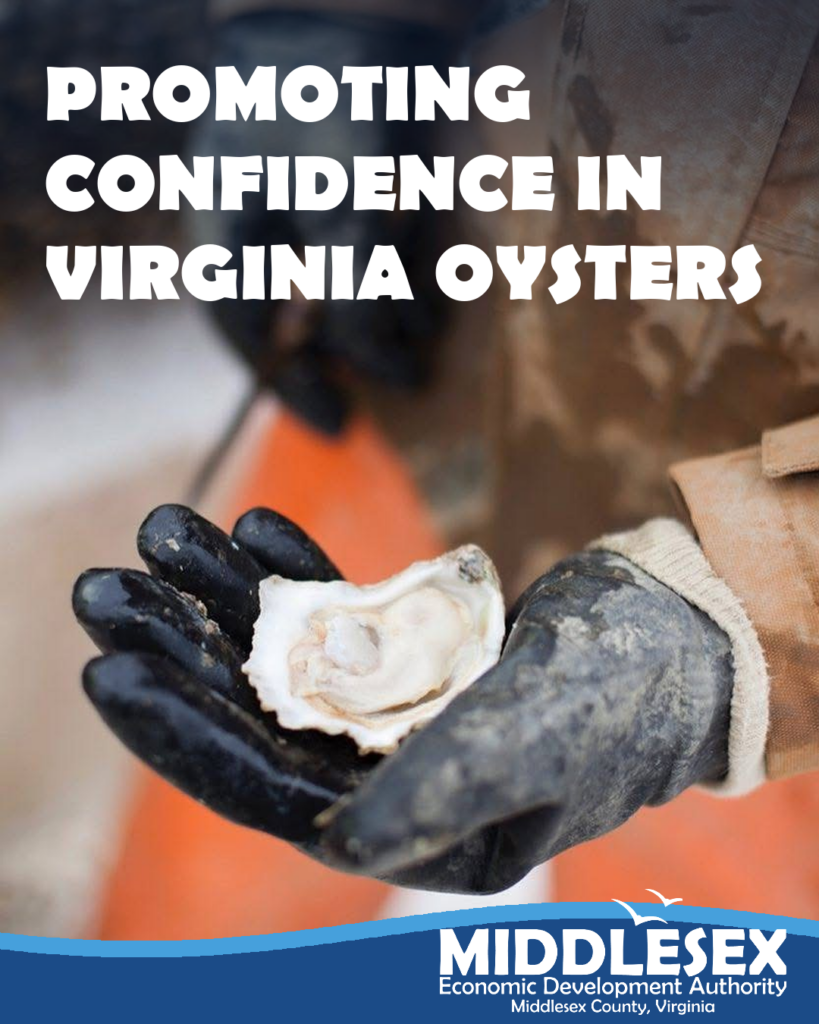
Promoting confidence in Virginia oysters
Unfortunately, some recent news stories have taken a sensationalized approach to their headlines, framing a Salmonella outbreak and oyster recall occurring in a single river as though it applied to all Virginia oysters. The facts are reassuring. Virginia oysters are safe to eat. Virginia’s shellfish safety program, run by the Virginia Department of Health, oversees more than 90 growing areas and responds to any concern by acting on the specific area involved. That approach was in use earlier this month, when a recall and temporary harvest closure were issued for oysters from the Little Wicomico River near the mouth of the Potomac. The Virginia Department of Health states that “shellfish products harvested from the other Virginia growing areas are not impacted”. The U.S. Food and Drug Administration says: “Oysters harvested from other Virginia growing areas are not part of this recall.”
The EDA is grateful for the prompt work of the agencies that safeguard Virginia’s seafood and encourages everyone to enjoy oysters this season. Buy oysters from local restaurants, seafood markets and growers, and ask where they were harvested. If you are concerned, you can read the latest information on the Virginia Department of Health’s Shellfish Safety page.